butterfly

butterfly
summer 2013
Showing posts with label potatoes. Show all posts

Monday, October 17, 2011

The Fall Garden

I headed up to the garden yesterday with every intention of pulling out all the tomato plants and cleaning up the bed.  I found a bunch of healthy plants with lots of green tomatoes.  I decided to just trim up the plants so I could walk easily between the beds and give them another week or two.  Who knows, they may have time to ripen on the vine.  If not, I will pull them off before the first frost and put them in a paper bag in the garage.  I do this every year and usually I get ripened tomatoes a few weeks later.


I lost most of my tomatoes to stink bugs this year.  The cherry tomatoes held up the best.  I am getting some roma tomatoes now that don't seem too affected by the bugs.


I did find a lot of potato plants popping up.  Any small tuber left has started the process over again. I pulled them up, here is what they look like in the ground.


I have lots of fall crops coming up.  I planted kale, broccoli, turnips, parsnips, beets, carrots, spinach, lots of lettuce and carrots. I have never eaten a parsnip or turnip, but when you grow your own food, it is fun to try something different.


spinach

kale

lettuce on left, broccoli on right


 Time to plant garlic.  Don't plant the kind from the grocery store - it is usually treated to not sprout.
You simply break off the cloves and plant them 4 to 6 inches apart and about 2 to 3 inched deep.  They will be ready around July.


garlic - now is the time to plant.
a hard neck variety - better for our climate


I was shocked to see my broccoli I planted last spring has finally given me a crop.  Next year I will research a quicker producing broccoli.  The plants I put out for the fall/winter I bought at Dutch Plant Farm in Frederick, MD.  I expect them to flower after frost.


broccoli and peppers

pole beans


I have row covers to put over the plants when the frost comes in.  It consists of lightweight white material supported by wires.  I will post a picture when I put them up.  This will help to extend the growing season.  I will also put a lot of straw mulch on top of my root crops to hopefully extend the season into winter.


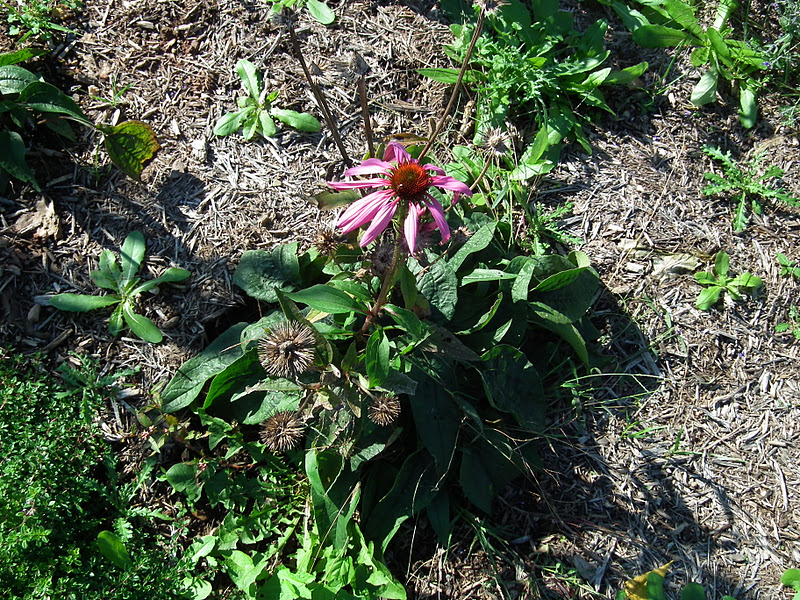
Some of my native flowers are blooming again!  Purple coneflower keeps coming up.  (I cut them down after they set seed and a new flower has emerged.)   Yarrow, gaura, liatris is still going strong. Coreopsis still attracting bees.

I  went to a lecture that mentioned an interesting fact about bees.  It seems it takes 20,000 to 40,000 honey bees to pollinate an acre of an apple orchard.  But only 250 native mason bees to do the same job.  Native bees are the first out in the spring and the last in in the winter.  The honey bee was brought over from Europe. Their benefit above pollination is their honey of course :)


bumble bee on liatris

zinnias

yarrow

echinacea  purple cone flower


Saw a wheel bug aka assassin  bug.   A beneficial that will eat lots of bugs you don't want in your garden.


October in Thurmont cannot be matched.  Took a walk in the woods.  Incredible!


Sunday, June 12, 2011

More food

Harvested some potatoes today.  I had some seed potatoes left over, so I planted them in another bed at the beginning of the season knowing I would take them very early to make way for green beans.   In a small area, I got some good size potatoes.  Some have wireworm damage.  I will just cut that area out when I roast them later.  Wireworms are the larval stage of the click beetle.  Unfortunately, you don't know until you pull the potatoes up.


accidently pulled out an onion while weeding 


First round of green beans are setting fruit.


Dusted broccoli with Bt.  Little caterpillars are starting to actively eat the leaves.  The Bt affects only the caterpillar, nothing else.  I will have to re-apply after the next rain.


imported cabbage worm is green.  the other is a cross-striped caterpillar


Native plant bed was weeded.  Seeing good bugs hanging out.


lady bug


another good bug

brown daddy long legs

zucchini squash and cucumbers are doing well


You may notice I have corn and green beans hidden in here.  Trying out the "three sisters" as an experiment


training cucumbers up the trellis


planted the next crop of bush green beans.  When the sugar snap peas are done, I will plant pole beans up the trellis


"bona fide" Burpee bush beans (Wal-Mart for a dollar)

volunteer marigold. Marigolds are believed to deter bugs and bunnies


Had a fight with gnats this morning. After digging three out of my eye with dirty hands, I sprayed my hat with Burts Bees insect spray.  Strong smell, non-toxic, really works.


A word about different gardening techniques.  At the University of Maryland Extension program we are taught Integrated Pest Management  We are also taught that many people want to know what to spray on their plants to make all the bugs go away.  That is fine for them,  we encourage people to carefully read all instructions on the bags or bottles they buy.

The way I garden is the way I choose to garden.  I can tolerate a little damage here and there, some people cannot. 

Last year, I was planting my russet potatoes and a neighbor came over and told me that I should start throwing Sevin down right away to keep the potato bugs away.  I don't disagree with their methods,  I just like to take a wait and see attitude.  When I see damage I need to address,  I will address it then.  I figure the lowest amount of chemicals in my life, the better.

During a breast cancer talk I attended a few years ago, a chemist from the University of Maryland spoke about chemicals in our everyday products.  The most eye opening part of the speech concerned the chemicals  in synthetic  fragrances added to almost everything we use in our everyday lives.  These are not good for anyone, so I started slowly going to fragrance free for almost everything I buy.  I use glass to store most food in the fridge and never cook food in plastic containers.  I also cook in cast iron or enameled cast iron pots and pans.  Even my grandson's Pampers have a strong fragrance to them when you take them out of the box.  Who are they trying to kid?  Nothing is going to cover that smell!   :)


Sunday, April 10, 2011

POTATOES

Last year I planted russet  potatoes in late March.  Really didn't follow the instructions  to the letter.  I guess I felt the rules applied to everyone BUT me.  I planted them too close, cut the pieces too small, didn't water as well a they would have liked.   In my defense, I was in my Master Gardener  class every Saturday all day and every Wednesday evening. And working a full time job.


The potatoes were too small.  I did harvest in the late summer.  They didn't even need to be cut.

This year I am planting "Dark Red Norland."  They are medium to large purple flowered plants.  They resist scab, leaf roll and potato viruses A and Y.


This year I  am following the rules.  Each piece I cut had 2 or 3 or more eyes.  I planted them a foot apart and spaced the rows 36".  Per instructions in the box they arrived in,  I cut them 24 hours before I planted to let them dry.  I also sprayed them with an organic fungicide.   Sulfur.


I do not need the trellis.  I am going to trellis every bed so I can rotate my crops every year easily.


They were planted 3" deep.  Once the foliage reached 6-8"  I will hill the soil up around the base of the plants, leaving 4" of the plant above soil level.  I then need to hill a second time 2-3 weeks later.  Hilling protects potatoes from "greening," facilitates harvesting, reduces weed growth, and and protects plants from late frosts.  I will use straw mulch to cover the potatoes after the second hilling.


Plenty of straw left in the barn.


According to the instructions, young "new" potatoes may be harvested anytime they reach usable size.  About 50 days.  The larger potatoes will be harvested in the fall when foliage is dry or tubers have reached full size.


More pictures of our barn.


Brick silo


These hay bales are about 4 feet high.


See you all next week.  I am so happy people are viewing my blog.  I am up to 7 countries!  Thank you!

Tell your friends in other countries, I would love to fill up my world map.


laura